
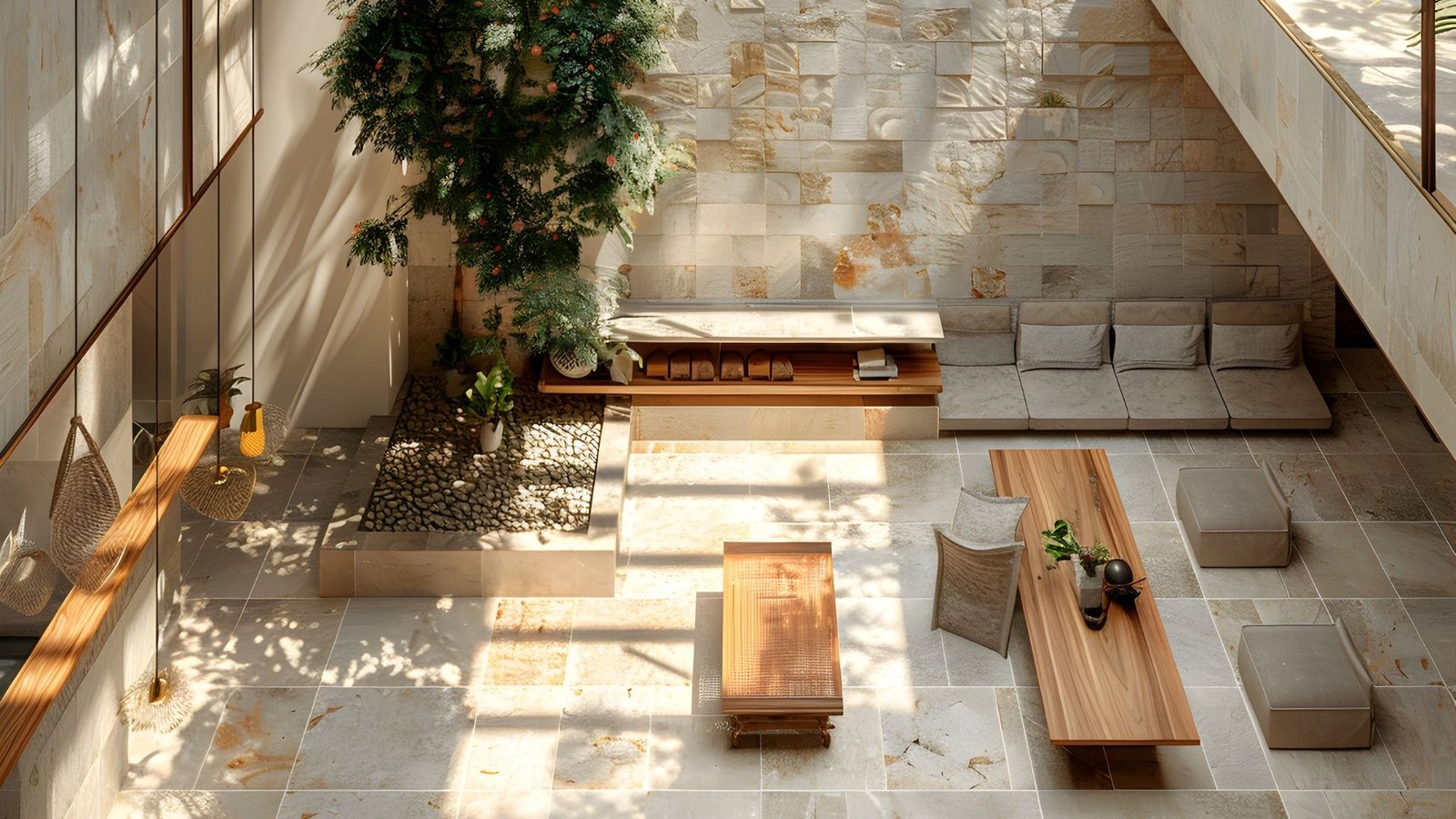
Outdoor spaces aren’t treated like leftovers anymore. They’ve become places where mornings begin slowly, evenings stretch longer, and conversations wander without clocks. Patios, especially, are expected to feel just as considered as the interiors they connect to. And among the many materials available today, white travertine keeps showing up in projects that feel calm, confident, and quietly luxurious. This isn’t about chasing trends, chasing attention. It’s about a surface that knows when to step back and let the space breathe.
This blog looks at why designers keep choosing this material for outdoor patios, and why it continues to feel right long after the initial excitement fades.
The kind of beauty that doesn’t try too hard
There’s an honesty to natural stone that’s hard to fake. Travertine, especially in lighter tones, carries that honesty beautifully. Soft movement. Gentle variations. Nothing feels forced.
Designers often talk about how a patio should feel, not just how it should look. White travertine helps achieve that balance. It doesn’t dominate the scene. It settles in. The surface feels calm underfoot, visually relaxed, and surprisingly forgiving in spaces that see real use.
Another reason this material resonates so well outdoors is its natural imperfection. Every slab is slightly different. That variation breaks monotony and makes the patio feel assembled rather than manufactured. And honestly, that’s what outdoor spaces need. Nature isn’t uniform, so why should the materials be?
How light behaves differently on lighter stone
Sunlight changes everything. It shifts through the day, moves across surfaces, and sets the mood without asking permission. Dark materials tend to absorb that energy. Lighter ones respond.
White travertine reflects light gently instead of bouncing it harshly. That means patios feel brighter without glare and cooler without feeling flat. On warm afternoons, the surface stays more comfortable underfoot. On cloudy days, it still manages to lift the space.
Designers appreciate materials that work with natural light rather than fighting it. Travertine does exactly that. Morning light softens its tones. Evening light brings out texture. Even artificial lighting at night plays well with its surface, creating a glow that feels inviting instead of dramatic.
Texture that quietly does its job
Outdoor patios have responsibilities. They need to look good, yes. But they also need to perform. Safety matters. Comfort matters. And this is where travertine’s natural texture earns its keep.
Finished properly, the surface provides grip without feeling rough. Honed and lightly tumbled finishes are especially popular outdoors because they strike that sweet spot between refinement and practicality. There’s enough traction to handle moisture around pools or gardens, without the surface looking overly treated.
Designers like that this texture doesn’t need extra layers or aggressive finishes to work. It’s built into the stone itself. And visually, that texture adds depth. Light settles into pores and edges. Subtle shadows appear and disappear. The patio feels alive throughout the day.
A material that fits almost anywhere
One of the quiet strengths of white travertine is how adaptable it is. It doesn’t belong to just one style or mood. It adjusts.
In modern homes, large-format slabs create clean lines and seamless transitions between indoor and outdoor areas. In more traditional settings, smaller tiles or patterned layouts add rhythm and warmth. Mediterranean courtyards, coastal villas, urban terraces. It works across all of them.
Designers often use white travertine in outdoor patios paired with:
- Simple furniture and minimal landscaping for a contemporary feel
- Wooden accents and greenery for a softer, organic look
- Water features and shaded seating for resort-style settings
The stone doesn’t lock the design into a single direction. It leaves room to evolve.
What happens after a few years outdoors
Some materials peak the day they’re installed. After that, it’s all about maintenance and cover-ups. Travertine plays a different game.
Over time, it develops character. A soft patina appears. The surface starts to feel settled, as it belongs there. This aging isn’t damage. Its depth. Similar to how wood gains richness or leather gains warmth through use.
With proper sealing and routine care, white travertine holds up well outdoors. Regular cleaning keeps it fresh, while natural variations that appear over time add to its charm. Designers often prefer materials that don’t demand perfection. Outdoor spaces, after all, are meant to be lived in.
Blurring the line between indoors and outdoors
There’s a reason designers talk so much about flow. When patios visually connect to interior spaces, the entire home feels larger, calmer, and more intentional.
Using the same or similar stone indoors and outdoors helps achieve that continuity. Travertine does this especially well because it doesn’t feel overly polished or overly rustic. It sits comfortably in both worlds.
Large sliding doors, open layouts, and transitional spaces benefit from this approach. The patio stops feeling like an add-on and starts feeling like part of the home’s rhythm. Furniture placement feels more natural. Lighting choices make more sense. The space just works.
And when evening arrives, warm lights against travertine surfaces create an atmosphere that invites people to stay longer. Conversations linger. Time slows down.
Longevity that designers value
Sustainability isn’t always about labels. Sometimes, it’s about choosing materials that last.
Natural stone has longevity built into it. When sourced responsibly, it avoids the repeated replacement cycle that many manufactured materials fall into. That alone reduces waste over time.
From a property perspective, patios finished with natural stone often hold their appeal better. They signal quality. Thoughtful choices. A sense that the space was designed to last.
Conclusion
Outdoor patios ask for a lot. They need to be comfortable, durable, visually pleasing, and flexible enough to adapt as lifestyles change. White travertine meets those demands without making a fuss about it.
Designers continue to choose it because it handles light gracefully, ages with character, and fits into almost any design story. It doesn’t chase attention. It earns appreciation over time. And in a world where design trends move fast, white travertine remains steady, relevant, and quietly timeless.
It’s not just about how a patio looks on day one. It’s about how it feels year after year. And that’s where white travertine truly shines.