
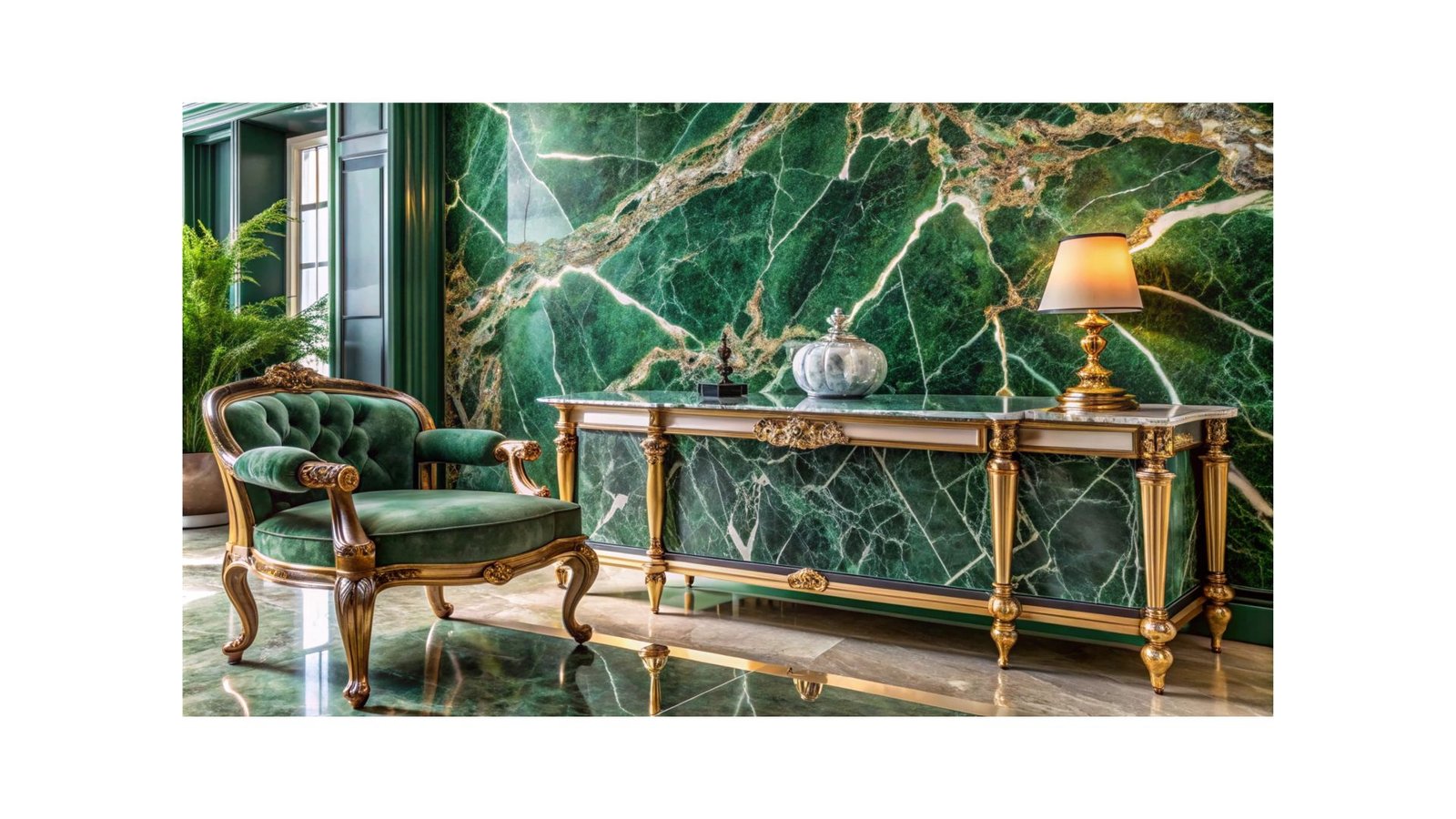
Green marble has a way of catching attention without asking for it. There is something grounding about it, perhaps because the color feels connected to landscapes, forests, and age-old architecture at the same time. Designers often turn to green marble when they want to introduce richness without relying on bold patterns or heavy ornamentation.
What is interesting is how varied this category really is. Green marble is not one look or one mood. Some varieties feel deep and dramatic, others calm and understated, and a few sit comfortably somewhere in between. That range is what makes it so appealing across residential and commercial spaces.
This blog looks at different types of green marble, their visual character, and where each works best when used thoughtfully in interiors.
Understanding the Appeal of Green Marble
Before getting into specific types, it helps to understand why designers reach for green marble in the first place. Green sits at a unique point on the colour spectrum. It can feel luxurious without being flashy, and bold without becoming overwhelming.
In the first paragraph of many design discussions, green marble often comes up as a way to add depth. It pairs beautifully with wood, brass, black metal, and even softer neutral palettes. Used well, it can make a space feel composed and intentional rather than decorative.
1. Verde Guatemala: Deep, Dramatic, and Confident
Verde Guatemala is one of the most recognisable green marbles. It features a rich, dark green base with lighter veins running through it, sometimes sharp, sometimes more fluid.
This marble works best in spaces where drama is welcome.
Ideal applications include:
- Fireplace surrounds in formal living rooms
- Feature walls in entrance lobbies
- Statement bathroom vanities
- High-end commercial reception areas
Because of its depth, designers often avoid using it across very large surfaces unless balanced with lighter materials. Paired with warm lighting, it creates a space that feels intimate and refined.
2. Rainforest Green: Organic and Expressive
Rainforest Green marble feels almost architectural on its own. Its branching veining resembles tree roots or river systems, which gives it a strong organic character.
Designers usually choose this stone when they want movement and visual interest. It works particularly well in spaces that benefit from a natural, grounded feel.
Best uses include:
- Accent walls in living or dining spaces
- Flooring in large, open areas with good natural light
- Tabletops or custom furniture pieces
Because the pattern is quite active, designers tend to let it stand alone. Surrounding materials are often kept simple to avoid visual overload.
3. Verde Alpi: Classic and Timeless
Verde Alpi is a darker green marble with fine, elegant veining. It has been used in European architecture for decades, which gives it a certain quiet authority.
This stone is often specified for spaces that aim for timelessness rather than trend-driven design.
Common applications:
- Wall cladding in formal interiors
- Staircases and landings
- Powder room walls
- Boutique retail spaces
Verde Alpi pairs especially well with classic detailing, muted lighting, and traditional materials. It feels comfortable in both historic settings and modern spaces that borrow from classical proportions.
4. Indian Green Marble: Subtle and Versatile
Indian Green marble tends to be softer in appearance compared to some of the darker international varieties. Its tone is calmer, and the veining is usually more understated.
Designers appreciate its versatility. It does not dominate a space, which makes it easier to use across larger surfaces.
Where it works best:
- Flooring in residential homes
- Kitchen countertops with lighter cabinetry
- Bathroom flooring and walls
- Office interiors seeking calmness
In the middle of many projects, green marble like this becomes a practical choice. It offers colour without demanding too much attention, which suits everyday living spaces.
5. Verde Levanto: Bold Veins, Strong Presence
Verde Levanto is known for its dark base and striking white or light green veining. It feels bold, graphic, and expressive.
Designers often treat this marble as a feature rather than a background material. It works well when used selectively.
Recommended applications:
- Bookmatched wall panels
- Statement countertops
- Lift lobbies and corridors
- Feature niches or bars
Lighting plays a key role here. Directional lighting highlights the veining and adds depth, making the stone feel almost sculptural.
6. Verde Jade and Lighter Green Variants
Lighter green marbles, often referred to as Verde Jade or similar names, bring a softer, fresher look. These stones feel less formal and more relaxed.
They are commonly used in spaces that aim for comfort with a touch of uniqueness.
Suitable spaces include:
- Spa-inspired bathrooms
- Bedroom accent walls
- Café or hospitality interiors
- Decorative panels
These varieties pair beautifully with soft textures, light woods, and neutral fabrics, creating a balanced and welcoming environment.
Choosing the Right Finish Matters
Beyond the type of green marble, the finish plays a major role in how it performs visually.
- Polished finishes enhance color depth and veining
- Honed finishes offer a softer, more contemporary look
- Leather finishes add texture and reduce glare
Designers often select finishes based on usage, lighting, and the overall mood of the space. The same marble can feel entirely different depending on this choice.
Practical Considerations Designers Keep in Mind
While aesthetics matter, experienced designers also think about long-term performance.
Key considerations include:
- Traffic levels in the space
- Exposure to moisture or heat
- Maintenance expectations of the client
When these factors are discussed early, green marble ages beautifully and remains a valued part of the design rather than a concern.
A Material That Offers Depth, Not Just Color
Green marble brings more than just colour into a space. It adds depth, texture, and a sense of permanence. Each variety tells a slightly different story, which is why designers are careful about where and how they use it.
Some spaces call for drama, others for calm. The range within green marble makes it possible to meet both needs without compromising on character.
Conclusion
Choosing the right green marble is less about following trends and more about understanding the space it will live in. From bold, dramatic varieties to softer, understated options, each type has a role to play when used thoughtfully.
When matched with the right application, lighting, and surrounding materials, green marble becomes more than a surface. It becomes part of the architecture itself, quietly shaping how a space feels and functions over time.