
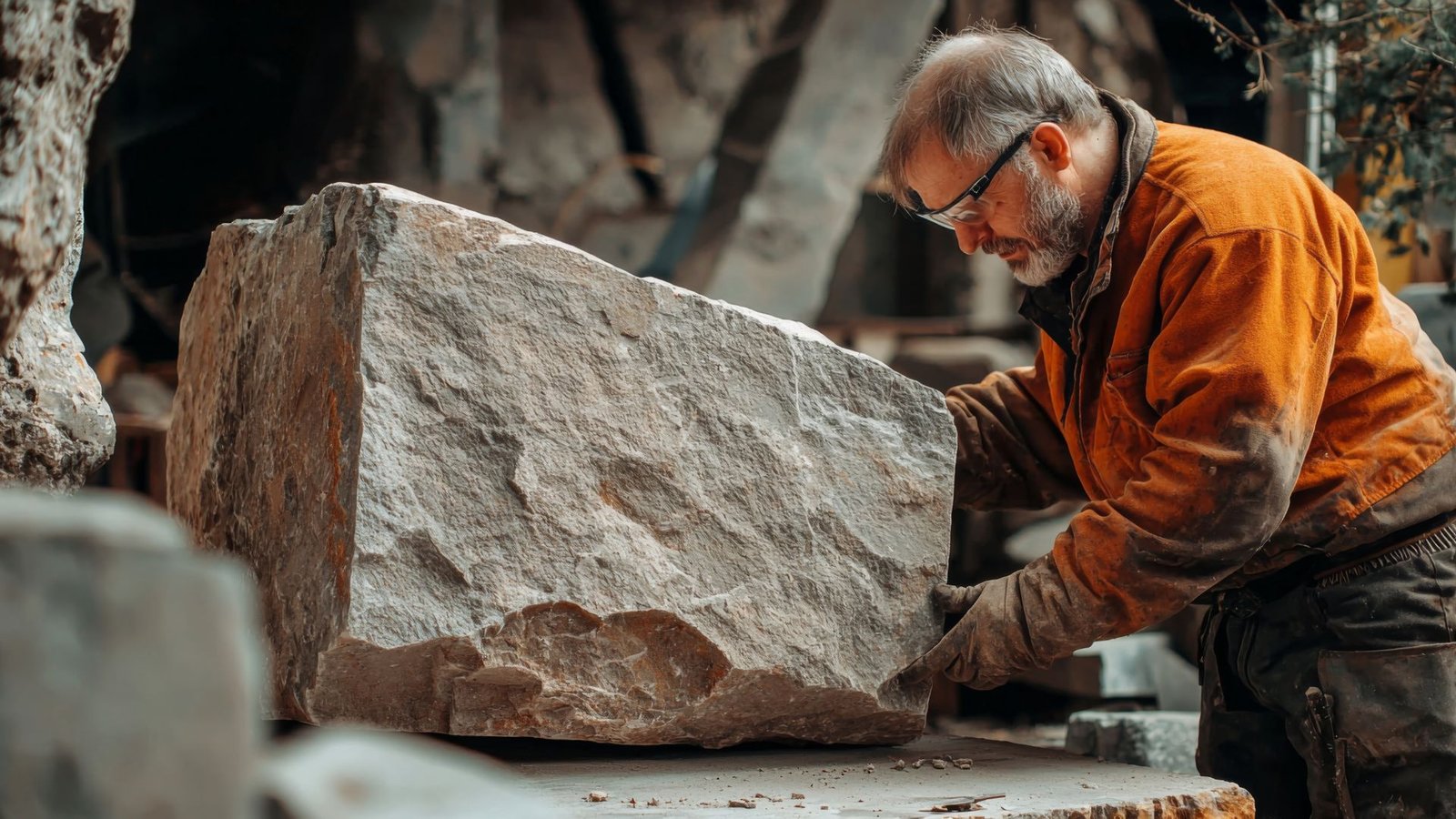
Walk through any historic building, an old family home, or even a centuries-old courtyard, and one thing becomes quietly obvious. The stone underfoot has changed, but it has not weakened. It has softened, deepened, and settled into its surroundings. This kind of ageing is very different from the way most modern surfaces behave, especially engineered stone, which often looks perfect at installation but struggles to hold that perfection over time.
Natural stone does not aim to stay untouched by life. It accepts use, light, moisture, and time as part of its story. That is where its long-term appeal really comes from.
This blog looks at why natural stone matures more gracefully than engineered alternatives, and what that means for performance, aesthetics, and long-term value.
Ageing Versus Deterioration
Ageing is often misunderstood in material selection. Many materials are designed to resist visible change, but resistance is not the same as resilience. Engineered surfaces are typically created to look uniform, clean, and controlled. The moment that surface is compromised, through scratches, heat exposure, or chemical wear, the damage feels final.
Natural stone behaves differently. Its colour variation, mineral movement, and internal structure allow small changes to blend rather than stand out. Over time, this creates a surface that feels lived-in rather than worn-out.
In practical terms, ageing in natural stone looks like this:
- Softening of sharp edges instead of chipping
- A patina that deepens colour rather than dulling it
- Surface marks that merge into the stone’s natural pattern
Deterioration, on the other hand, is what happens when a surface loses structural or visual integrity. Many engineered materials age in this direction because their appearance relies on surface treatments rather than inherent depth.
Material Depth Matters More Than Surface Perfection
One of the key differences between natural stone and engineered alternatives lies beneath the surface. Natural stone is consistent throughout its thickness. What you see on top continues through the slab. That means wear is gradual and predictable.
Engineered materials depend heavily on resins, pigments, and surface finishes. Once those layers are affected, the contrast becomes obvious. A scratch exposes a different texture. Heat marks disrupt colour consistency. Repairs are possible, but rarely invisible.
With stone materials like marble, quartzite, and travertine, refinishing is part of the lifecycle. A surface can be honed, polished, or brushed years later and still feel authentic. The material allows this because it was never trying to hide its nature in the first place.
Patina As A Sign Of Quality, Not Compromise
Patina is often discussed as a flaw when it comes to interiors. In reality, patina is evidence of honest ageing. Natural stone develops it slowly, influenced by light, foot traffic, and daily use.
In residential spaces, this can mean:
- Floors that feel warmer and more settled with time
- Countertops that gain character instead of looking tired
- Wall cladding that responds beautifully to changing light
Commercial spaces reveal this even more clearly. Old hotels, public buildings, and heritage structures rely heavily on natural stone because it absorbs years of use without losing dignity. Engineered alternatives often need replacement once visual wear becomes noticeable, which usually happens faster than expected.
Performance Under Real-World Conditions
Laboratory performance ratings rarely tell the full story. Real-world conditions include spills, shifting temperatures, humidity, cleaning chemicals, and human habits that are hard to control.
Natural stone has been tested by centuries of use in environments far harsher than modern interiors. Heat resistance, natural breathability, and structural density help it adapt rather than react.
Engineered stone, while strong in controlled conditions, can struggle with:
- Prolonged heat exposure
- UV-related colour changes
- Resin breakdown over time
This does not mean engineered surfaces have no place. It means their ageing curve is steeper. Once deterioration begins, it accelerates.
Repairs and Refinishing Over Replacement
One of the least discussed advantages of natural stone is its repairability. Chips can be filled. Surfaces can be reworked. Finishes can be altered as design preferences evolve.
Engineered materials are far less forgiving. Damage often requires section replacement, and matching older surfaces can be difficult due to batch variations or discontinued finishes.
From a sustainability standpoint, this matters. Longevity is not just about how long a material lasts, but how many times it avoids replacement. Timeless stone stays relevant not because it resists change, but because it adapts to it.
The Role Of Visual Complexity
Natural stone never relies on uniformity to appear premium. Its appeal lies in variation. Veins shift, tones fluctuate, and patterns move across slabs in ways that manufactured materials cannot replicate convincingly.
This visual complexity helps disguise minor wear. A small scratch on a richly veined marble is absorbed into the overall pattern. The same mark on a perfectly uniform engineered surface becomes instantly visible.
Designers often recognise this instinctively. Spaces meant to last tend to favour materials that forgive time, not fight it.
Long-Term Value Beyond Trends
Trends change faster than materials do. What looks contemporary today may feel dated in a decade. Engineered finishes are often tied closely to specific design moments, colours, or surface effects.
Natural stone sits outside this cycle. A well-chosen stone ages into neutrality, not obsolescence. That is why older stone floors rarely feel outdated, even when everything around them has changed.
From a property perspective, this stability matters. Buyers and occupants respond positively to materials that signal permanence and quality. They may not articulate it, but they feel it.
Where Engineered Stone Still Fits, And Where It Struggles
It is worth acknowledging that engineered surfaces offer advantages in controlled, low-impact environments. Consistency, availability, and initial cost can be appealing.
However, in spaces where ageing is inevitable, kitchens, circulation areas, hospitality interiors, natural stone holds its ground more convincingly. Once the engineered stone surface begins to degrade, its limitations become difficult to ignore.
This contrast becomes more apparent around the midpoint of a material’s life. That is where the second mention of engineered stone belongs, not at installation, but years later when performance and appearance diverge.
Age As An Asset, Not A Liability
Natural stone accepts time as part of its identity. It does not pretend to stay unchanged. Instead, it becomes richer, calmer, and more integrated into the spaces it occupies.
This relationship with time is what separates it from engineered alternatives. One is designed to delay ageing. The other is designed to age well.
In the end, this distinction becomes unavoidable. Engineered stone aims for control. Natural stone embraces evolution. That is why one often needs replacement, while the other earns respect with age.
Conclusion
Materials reveal their true value only after years of use. In that long view, natural stone continues to perform, adapt, and retain meaning in a way engineered stone rarely achieves. Its depth, repairability, and visual honesty allow it to age without apology.
Timeless stone does not promise perfection. It promises continuity. And in architecture and interiors, that promise often matters more than anything else.