
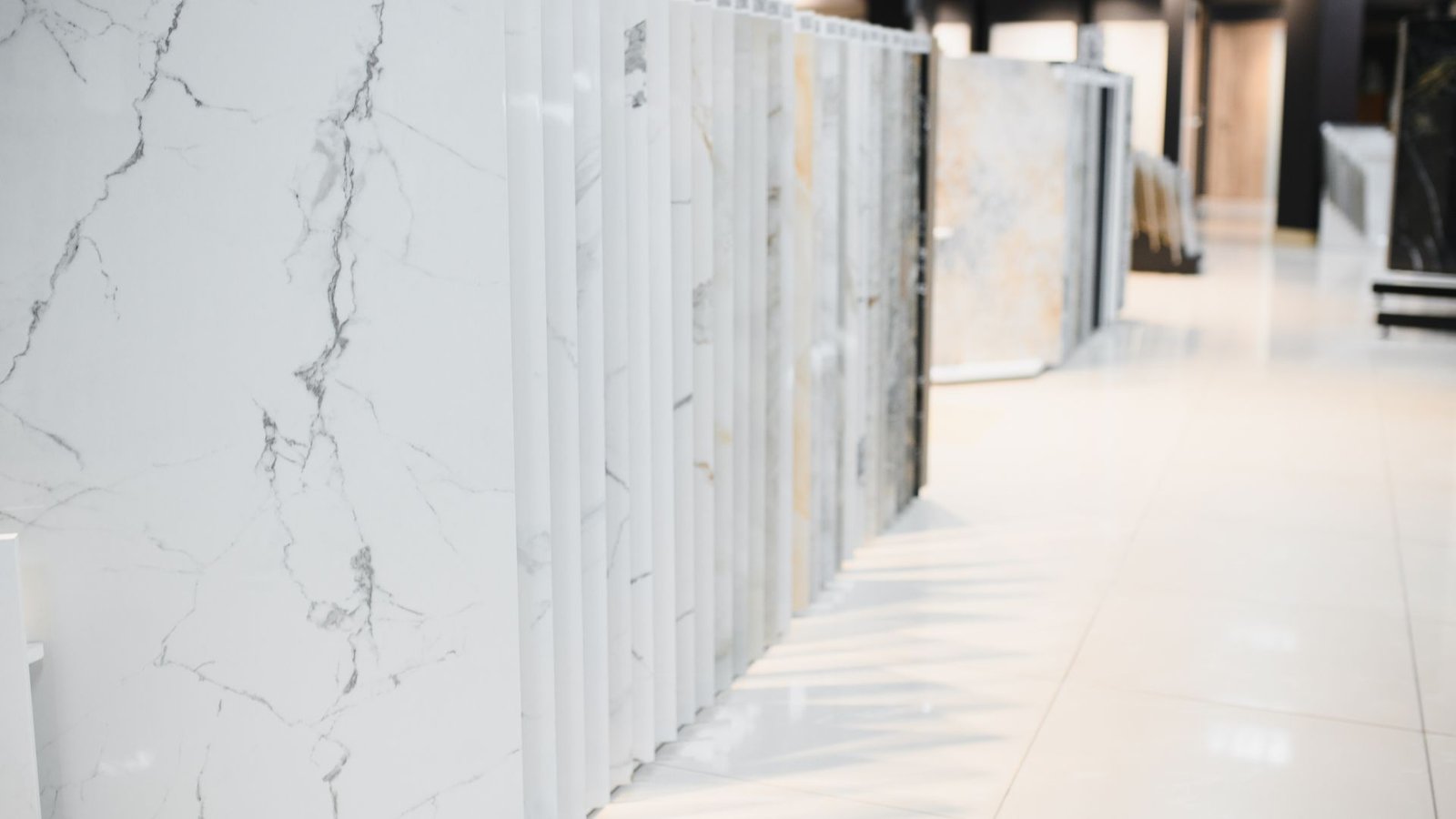
Walk into any home with natural stone, and you’ll notice it instantly. That cool surface. The patterns. The way it just looks expensive without trying too hard. Stone has that quiet confidence that tiles and laminates can’t really fake.
But here’s the thing, people don’t talk about enough: not every stone ages like a superstar. Some slabs stay gorgeous for decades. Others start looking tired much sooner than you expected. Stains show up. Edges chip. Cracks appear out of nowhere. And you’re left thinking… wasn’t Stone supposed to be “lifetime material”? A lot of that comes down to what’s happening inside the stone, not the finish on top. Stone porosity is a big one. So is the natural stones density and Veining.
This blog is going to talk about how veining, porosity, and density decide whether your stone stays strong or starts struggling.
Stone veining: pretty patterns, real performance
Veins are the reason people fall in love with stone in the first place. That flowing movement across the slab. Those bold lines. The drama. The luxury feel. It’s basically nature showing off.
But veins aren’t only about looks. Stone veining is also a structural feature. It’s the result of minerals filling natural cracks or spaces during formation. And depending on the stone, those veins can behave like support beams or like weak points waiting to be tested.
When stone veining helps and when it doesn’t
Veins can affect longevity in a few very real ways:
- Stress points: Pressure doesn’t spread evenly in heavily veined stone.
- Crack direction: If the slab gets stressed, cracks often follow vein lines.
- Cut sensitivity: If the slab is cut poorly against the grain, it can become more vulnerable.
This is why two slabs of the same stone can behave differently. One feels solid for years. Another starts showing issues, even with careful use. Same stone family. Different internal story.
And yes, that’s exactly why fabricators sometimes insist on extra support or careful layout for vein-heavy slabs. They’re not being dramatic. They’re being smart.
Porosity: the hidden reason stones stain and age faster
Porosity sounds like a nerdy lab word. But it’s actually super simple: porosity is how many tiny pores and spaces exist in the stone. Those micro-spaces can absorb water, oil, and anything else that lands on them.
Ever spilled water on a stone and noticed it darken for a moment? That’s porosity in action. It’s not always a problem, but it can become one fast depending on where the stone is installed.
What high porosity leads to over time
Porous stone isn’t “bad.” It’s just more reactive. And it needs smarter care. If porosity is high, long-term issues can include:
- Stains that don’t fully lift (especially oils)
- Moisture absorption in wet zones
- Surface dullness from repeated cleaning or chemical contact
- Efflorescence (that chalky white salt residue) in some installations
- Weather damage outdoors, especially in rainy conditions
This is one of the biggest reasons bathroom and outdoor stone projects sometimes disappoint. The stone itself wasn’t wrong. The selection didn’t match the environment.
Density: the quiet strength behind stone durability
If porosity is about how much a stone can absorb, density is about how tightly packed it is. Dense stones have minerals locked in closer together, usually making them tougher in day-to-day life.
And here’s the catch: stone can look strong and still not be dense enough for heavy use. Looks can be misleading. Shine can be misleading. Even the weight of the slab doesn’t tell the full story.
But density? Density doesn’t lie.
What density improves
A denser stone generally supports better:
- Scratch resistance
- Impact resistance (less chipping)
- Edge strength (especially on countertops and steps)
- Long-term structural stability
This is where stone durability starts getting real. Because durability isn’t only about resisting stains, it’s also about surviving normal life: kids, guests, dragging chairs, dropped utensils, daily cleaning… all of it.
How veining, porosity, and density work together
Here’s where it gets interesting. These three factors don’t live separately. They team up, and the combination is what determines longevity.
A stone can be dense but heavily veined. A stone can have low veining but high porosity. Another slab might have moderate porosity and high density, but still fail if the wrong vein runs through the wrong place.
That’s why buying stone based only on appearance is risky. That “wow slab” might be perfect for a wall. But on a kitchen island? Maybe not.
So yes, it’s a balancing act:
- Stone veining affects structural behavior.
- Porosity controls absorption and staining potential.
- Density supports wear resistance and toughness.
When the mix is right, the stone ages beautifully. When it isn’t well, the stone starts “talking back” with stains, cracks, or wear marks.
Where stone porosity matters most in real-life zones
Let’s get practical, because that’s what really helps when choosing stone.
You don’t need to memorize science terms. You just need to match the stone to the space. And the truth is, stone porosity is the factor that most often gets ignored until something goes wrong.
Kitchens (counters and islands)
Kitchens are brutal: heat, oils, acids, and daily spills. If the stone is porous and unsealed or poorly maintained, stains become a story you’ll hear again and again.
Choose a stone that supports high stone durability, and if porosity is moderate, seal it properly. No shortcuts.
Bathrooms and wet areas
Bathrooms aren’t just “wet.” They’re constantly wet. Steam. Water splashes. Product residue. If the stone is porous, it can absorb moisture over time and start dulling or spotting.
Outdoor installations
Outdoor stone takes everything: rain, sun, dust, temperature changes. Some stones handle it like champions, others don’t.
Dense and less porous options usually perform better. Vein-heavy stone can also be risky outdoors if freeze-thaw is a concern in that climate.
Simple ways to judge a slab before buying
Here’s what’s refreshing: stone selection doesn’t need to feel complicated. A few smart checks can save years of regret.
Quick selection checks
- Water drop test: A few drops will show absorption speed.
- Inspect veining zones closely, especially where cutouts will be.
- Look for filled fissures: occasional filling is normal in some stones; excessive filling can mean vulnerability.
- Ask for strength ratings: absorption, flexural strength, compressive strength.
Also, don’t forget installation. Even high stone durability materials can fail if the slab isn’t supported correctly, seams are weak, or adhesives aren’t suitable.
Stone is strong, but it’s not magic.
Conclusion
Natural stone can absolutely last for decades. It can stay beautiful through daily life and still look premium years later. But it only happens when the right stone is chosen for the right purpose.
Stone veining decides where stress travels and where cracks could form. Porosity decides how easily liquids and moisture seep in. Density decides how tough the stone stays through impact, wear, and time. Put those together, and you’ll understand why some stones age like royalty… and others struggle early.
So before falling for the prettiest slab in the showroom, pause for a second. Look deeper. Ask smarter questions. Plan the application properly. That’s how you get real stone durability without constant worry.
And yes, remember this: stone porosity isn’t a small detail. It’s one of the biggest reasons stone either lasts beautifully or doesn’t.